If you have ever wondered what actually happens to food after your body digests it, the Krebs cycle is a large part of the answer. It is the biochemical process that sits at the center of cellular energy production, connecting what you eat to the ATP your cells use to do everything from moving a muscle to forming a memory. Most people have heard of it in a biology class and promptly forgotten it, and that is understandable given how it is usually taught. As a series of chemical names cycling through a diagram, it is easy to dismiss as academic. As an explanation for why you feel energized some days and depleted on others, it is considerably more interesting.
This is not a biochemistry lecture. The goal here is to explain what the Krebs cycle does in terms that connect directly to your experience of energy, fatigue, and health, and to show why several nutrients you may already be taking have their effects precisely because of what happens in this cycle.
Why the Krebs Cycle Is the Central Hub of Your Body’s Energy System
Think of your body’s energy production as a three-stage relay. The first stage, glycolysis, breaks glucose down into a simpler molecule in the fluid of the cell and produces a small amount of ATP. The third stage, the electron transport chain, is where most ATP is actually manufactured, deep in the mitochondrial membrane. The Krebs cycle is the second stage, and it serves as the essential bridge between the other two.
What makes the Krebs cycle the hub rather than just a middle step is its versatility. It accepts molecules derived from glucose, fat, and protein alike, making it the common processing point for virtually every calorie you consume. It then feeds the electron transport chain with the energy-carrying molecules it needs to produce ATP. Remove it, and the entire energy production system collapses regardless of food supply.
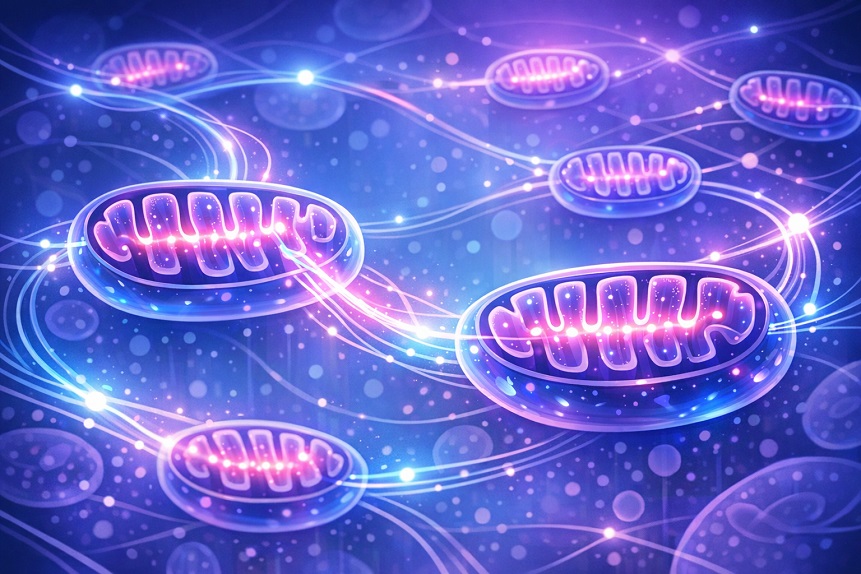
The cycle runs inside the mitochondrial matrix, the innermost compartment of the mitochondria. This is why mitochondrial health is so directly connected to efficient energy metabolism. A cell with damaged or depleted mitochondria cannot run the Krebs cycle efficiently, and the consequences ripple through to ATP production, cellular function, and ultimately how you feel. For the full picture of how ATP production works across all three stages, the dedicated article covers the complete pathway.
What the Krebs Cycle Actually Does Step by Step (Without the Jargon)
The Krebs cycle is a circular series of eight chemical reactions. Each reaction is catalyzed by a specific enzyme, and together they transform a two-carbon molecule called acetyl-CoA into carbon dioxide, hydrogen, and a small amount of ATP. The carbon dioxide is exhaled. The hydrogen, carried by molecules called NADH and FADH2, travels to the electron transport chain. The cycle then resets and begins again with another molecule of acetyl-CoA.
Acetyl-CoA enters the cycle by combining with a four-carbon molecule, creating a six-carbon compound. Over eight reactions, that compound is progressively broken down, releasing carbon atoms as CO2 and generating energy-carrying molecules. By the end of one complete turn, the four-carbon starting molecule is regenerated, ready to accept another acetyl-CoA, while the energy carriers move on to the electron transport chain.
The reason the cycle is described as circular rather than linear is that the starting molecule is regenerated with each complete turn, allowing the process to continue as long as acetyl-CoA is available as input. It is a self-sustaining loop, not a one-way conveyor belt.
One turn of the Krebs cycle produces 3 NADH, 1 FADH2, 1 GTP, and 2 CO2. The NADH and FADH2 are the real prize: they carry high-energy electrons to the electron transport chain, where the bulk of ATP production happens. Understanding what the electron transport chain does with these molecules completes the energy production picture.

The Nutrients Your Krebs Cycle Depends On to Run Properly
The Krebs cycle is not self-sufficient. Each of its eight enzyme-catalyzed reactions depends on specific cofactors to proceed at full efficiency. Several of these cofactors are nutrients, which means dietary choices and supplementation have a direct and measurable impact on how well the cycle runs.
The B vitamins are the most important nutritional inputs. Thiamine (B1) is required for the conversion of pyruvate to acetyl-CoA, the step that feeds material into the cycle from glucose metabolism. Riboflavin (B2) is a component of FADH2, one of the energy carriers produced by the cycle. Niacin (B3) is a component of NADH, the other primary energy carrier. Pantothenic acid (B5) is a structural component of coenzyme A, the molecule that forms acetyl-CoA. In other words, four of the eight B vitamins are directly embedded in the machinery of the Krebs cycle. A deficiency in any of them creates a specific bottleneck in the cycle’s operation.
Magnesium is required at multiple points in the cycle and also in the ATP synthesis step that follows. Iron is a component of several of the enzymes involved. Lipoic acid, which you may recognize as a supplement ingredient, is a cofactor for two of the key enzyme complexes in the cycle. This is the biochemical basis for why R-lipoic acid, the more bioavailable form of this compound, attracts interest as a mitochondrial support nutrient. The article on R-lipoic acid versus alpha-lipoic acid explains why the specific form matters.
Magnesium deficiency, which is among the most common nutritional shortfalls in adults, can create a subtle but real drag on Krebs cycle efficiency. People who eat adequately but still experience fatigue are sometimes surprised to find that targeted nutritional support for mitochondrial cofactors produces measurable improvements in how they feel, precisely because the cycle was running at less than full capacity due to these deficiencies.
How the Krebs Cycle Connects to Fat Burning and Weight Management
Fat burning and energy production are closely intertwined through the Krebs cycle. Fatty acids broken down via beta-oxidation enter the cycle as acetyl-CoA, the same entry point used by glucose-derived molecules. The cycle processes both carbohydrate and fat calories, which is why its efficiency directly affects how well your body accesses stored fat for energy.
During prolonged exercise or periods of carbohydrate restriction, the proportion of acetyl-CoA arriving at the cycle from fat rather than glucose increases. A well-functioning Krebs cycle handles this fuel switch smoothly, maintaining ATP production as the fuel source shifts. An impaired or nutrient-depleted cycle struggles with the transition, which can manifest as energy dips during extended exercise or difficulty maintaining sustained energy during periods of lower carbohydrate intake.
Acetyl L-carnitine plays a role here worth mentioning. Carnitine is required to transport long-chain fatty acids across the mitochondrial membrane so they can undergo beta-oxidation and contribute to the Krebs cycle. Without adequate carnitine, fatty acids queue up outside the mitochondria rather than entering the cycle as fuel. This is one reason carnitine deficiency is associated with fatigue and reduced exercise tolerance even in people who are eating adequately. The full role of acetyl L-carnitine in mitochondrial energy metabolism is worth understanding if fat metabolism and sustained energy are priorities for you.
What Disrupts the Krebs Cycle and How That Feels in Practice
Krebs cycle disruption does not announce itself with a specific diagnostic label. It shows up as fatigue, and particularly as the kind of fatigue that is present despite adequate sleep and nutrition, that worsens with sustained effort rather than mild exertion, and that does not respond reliably to rest or stimulants.
Oxidative damage to the enzymes involved in the cycle is one of the primary mechanisms of disruption in aging. The mitochondrial matrix, where the cycle runs, is in close proximity to the reactive oxygen species generated by the electron transport chain, and enzyme damage accumulates over time. This is one of the reasons that antioxidant support within the mitochondria, from compounds like CoQ10 and PQQ, has relevance beyond their direct roles in electron transport and biogenesis. Protecting the enzymes of the Krebs cycle from oxidative damage keeps the cycle running at closer to its designed efficiency.
Some medications interfere with B vitamin absorption or utilization, indirectly impairing the cycle’s cofactor supply. Metformin, widely used for blood sugar management, affects mitochondrial function in ways that include impacts on the Krebs cycle, which is a reason to monitor nutritional status if fatigue is a concern alongside its use.
The Krebs cycle is not something most people need to memorize in detail, but understanding that it exists and that it depends on specific nutrients to run well is genuinely useful. Fatigue is rarely random. It tends to have a location in the body’s machinery, and the Krebs cycle is one of the more common places where things quietly slow down long before anyone runs a test to look for it.