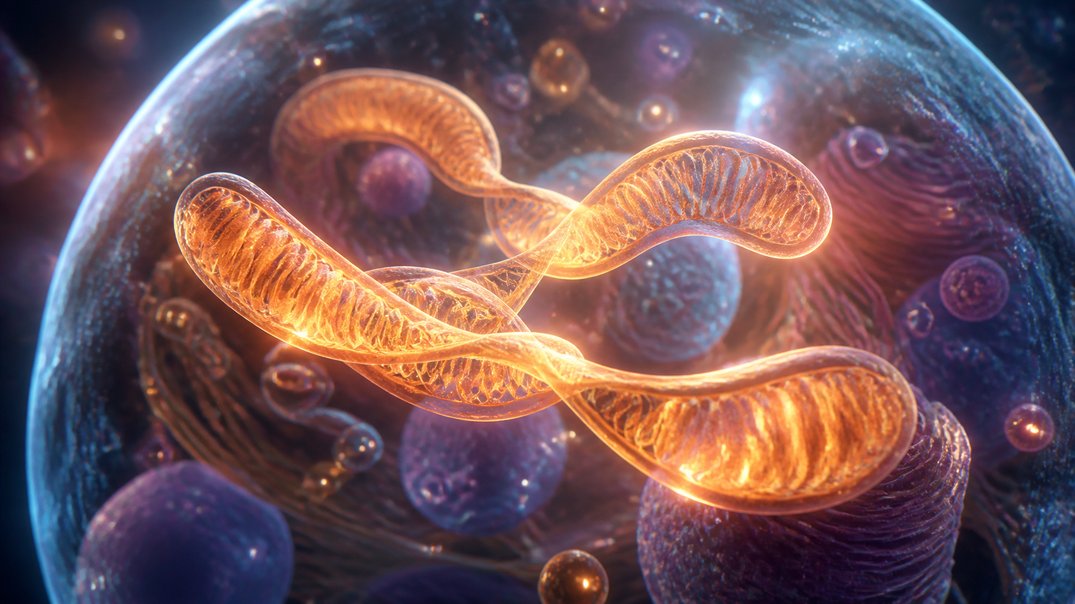
Chronic stress raises your body’s energy demands while wearing down the mitochondria that supply that energy. Research suggests that long-term stress can lower mitochondrial function, increase oxidative damage, and fuel inflammation, which together can leave you feeling drained. Much of this work is still early, and a lot of it comes from animal studies.
How Your Cells Make Energy Under Pressure
Every cell relies on mitochondria to turn nutrients and oxygen into ATP, the molecule cells spend as fuel. If you want the basics, see our guide to how ATP is made. Mitochondria produce ATP through a process called oxidative phosphorylation.
Stress doesn’t shut that process down. It raises the bill. A 2023 review in Frontiers in Behavioral Neuroscience notes that the brain alone uses about 20 percent of the body’s energy and that stress increases its energy needs. In the short term, mitochondria rise to the challenge by boosting ATP output. The trouble begins when the demand never lets up.
What Chronic Stress Does to Mitochondria
The same review explains that chronic exposure can exhaust your spare energy reserves, a state researchers call allostatic overload. Studies it cites report that chronic stress lowers mitochondrial respiration, the process behind ATP production, and reduces the activity of genes and proteins mitochondria depend on. Stress hormones called glucocorticoids have a two-sided effect: moderate levels help, while high concentrations can cause harm.
There is also a cleanup problem. Stress can damage mitochondria, causing them to release reactive oxygen species and mitochondrial DNA, which may promote inflammation. Our guide to oxidative stress and mitochondria explains why that costs you energy.
What the Evidence Does and Doesn’t Show
It’s worth being straightforward here. Many of these findings come from animal studies. In one example the review describes, rats exposed to stress during pregnancy showed reduced mitochondrial respiration in the prefrontal cortex of the brain after birth. Human research is emerging but less settled, and the review does not directly tie these cellular changes to fatigue as a symptom. The connection is plausible, but it isn’t fully proven.

Habits That Protect Your Cellular Energy
You can’t remove every stressor, but you can protect your recovery time. Sleep is when your cells do much of their repair work, as we explain in how sleep repairs your mitochondria. Regular movement, real breaks during the day, and time with supportive people can all help your body step out of high alert. Even short pauses count: a few minutes of slow breathing or a walk between demanding tasks gives your system a chance to downshift. If stress feels unmanageable, a mental health professional can help.
Supporting Mitochondria During Stressful Seasons
Some people also look at nutritional support for their mitochondria during demanding periods. Performance Lab Energy is a caffeine-free formula with magnesium malate, acetyl L-carnitine, R-lipoic acid, CoQ10, PQQ, and BioPerine, ingredients involved in how mitochondria produce cellular energy.
Frequently Asked Questions
Does Stress Really Affect Mitochondria?
Research suggests it can. Studies cited in a 2023 review report that chronic stress lowers mitochondrial respiration and can damage mitochondria.
Is This Research Based on Human Studies?
Much of it comes from animal studies. Human research is still emerging, so the findings are promising but not settled.
Can Better Habits Restore Energy After Long-Term Stress?
Sleep, movement, and recovery time are sound steps for overall energy. Research on reversing stress-related mitochondrial changes in people is still developing.