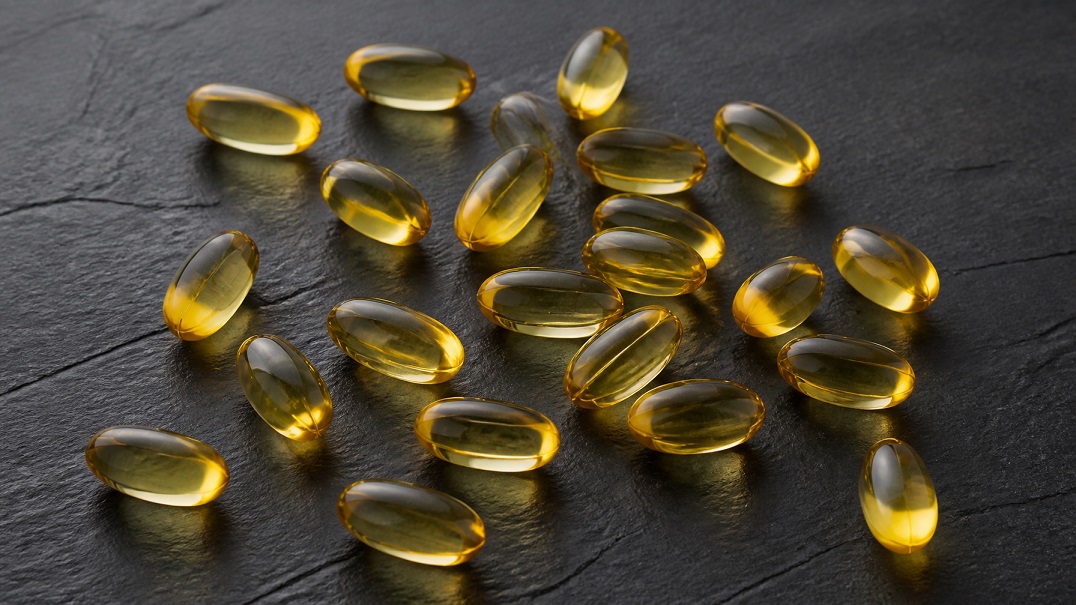
You find a bottle of CoQ10 at the back of a cabinet that expired eight months ago. Or you bought a three-month supply and life intervened and now you have an open bottle that has been sitting for longer than planned. The question is whether the supplement is still worth taking, whether the expiration date represents a real threshold or a manufacturer’s conservative estimate, and whether any of the compounds relevant to mitochondrial energy support have specific stability concerns that make this question more or less important for them in particular.
The answers are more nuanced than either “expiration dates are meaningless marketing” or “throw out anything past the date” would suggest, and they are specific to the compound in question in ways that a single general rule does not capture.
What Supplement Expiration Dates Actually Mean Legally and Scientifically
Supplement expiration dates in the United States are not governed by the same regulatory framework as pharmaceutical expiration dates. The FDA does not require dietary supplements to carry expiration dates, but it does require that if a manufacturer chooses to include one, it must be truthful and backed by stability testing demonstrating that the product maintains at least the labeled potency through that date under recommended storage conditions. Most manufacturers do include expiration dates, both because it is considered good practice and because it protects them from claims related to degraded products.
The expiration date represents the point at which the manufacturer can verify the product maintains at least ninety percent of its labeled potency under recommended storage conditions. It marks the limit of verified data rather than a cliff edge where potency suddenly fails. Many supplements remain at near-labeled potency for months beyond the stated date. The relevant question is not whether a supplement is past its date but whether the specific compounds are chemically stable under the storage conditions the bottle has actually experienced.
CoQ10 Stability: Form Matters More Than Date
CoQ10 stability depends more on its chemical form than on age relative to the expiration date. Standard crystalline CoQ10 is chemically stable under appropriate conditions, sensitive to heat, light, and moisture but not prone to rapid degradation at room temperature in a sealed capsule. Well-formulated products retain near-labeled potency well beyond their stated dates when stored correctly.
Ubiquinol, the reduced form of CoQ10, is considerably less stable than ubiquinone and more prone to oxidation. Ubiquinol products require better storage conditions and are more likely to have genuinely declined in potency by the time an expiration date is reached, particularly if the bottle has been opened and repeatedly exposed to air. Manufacturers of ubiquinol products typically use nitrogen-flushed or vacuum-sealed packaging specifically because of this stability concern.
MicroActive CoQ10, which uses beta-cyclodextrin microencapsulation, has improved stability over standard crystalline CoQ10 because the encapsulation protects the CoQ10 from moisture and light exposure. The encapsulation technology that improves bioavailability also incidentally improves shelf stability, making MicroActive CoQ10 one of the more storage-robust forms available. For any CoQ10 product, appropriate storage conditions, cool, dry, away from direct light, and in the original sealed container until use, extend effective potency significantly beyond what poor storage conditions would allow.

R-Lipoic Acid: The Stability Challenge Worth Knowing About
R-lipoic acid is the compound in a standard mitochondrial energy formula where expiration date and storage conditions matter most, for reasons rooted in its chemistry rather than regulatory caution.
Free-acid R-lipoic acid, the most potent but least stable form, is prone to polymerization, a process in which individual lipoic acid molecules link together into chains that are poorly absorbed. This polymerization occurs more rapidly at higher temperatures and is essentially irreversible. A free-acid R-lipoic acid supplement that has been stored improperly or allowed to warm significantly, such as sitting in a hot car or a warm cabinet near a stove, may have already undergone substantial polymerization before its expiration date, making it poorly bioavailable even if technically within dating.
Stabilized forms of R-lipoic acid, specifically sodium R-lipoic acid and microencapsulated versions such as Bio-Enhanced R-Lipoic Acid, address this polymerization problem through formulation. The sodium salt form stabilizes the molecule against polymerization at normal storage temperatures. Microencapsulation physically separates molecules from each other, preventing chain formation. These stabilized forms retain their bioavailability characteristics significantly better across storage time and temperature variations than free-acid R-lipoic acid does.
The practical implication is that for R-lipoic acid specifically, the form you purchase matters significantly for how well the product holds up over its shelf life. An inexpensive free-acid R-lipoic acid product may have already lost a significant proportion of its bioavailability through polymerization by the time you purchase it, especially if its supply chain involved warehousing in warm conditions. A stabilized form is worth the additional cost partly for the immediate bioavailability benefit and partly because it retains that benefit more reliably across the product’s useful life. The comparison of these forms is covered in the dedicated article on R-lipoic acid versus standard ALA.
PQQ, ALCAR, and Magnesium: The Relatively Stable Compounds
BioPQQ is chemically stable under normal conditions and retains biological activity well across typical storage timeframes. The primary concern is moisture, addressed by desiccants in well-packaged supplements and by keeping bottles sealed between uses. A BioPQQ supplement stored appropriately is unlikely to have meaningfully degraded by its expiration date or modestly beyond it.
Acetyl L-carnitine is a water-soluble amino acid derivative that is chemically stable under most storage conditions. It is not particularly sensitive to light, heat within normal ranges, or oxidation in the way that fat-soluble compounds can be. Well-manufactured ALCAR capsules in a sealed bottle typically retain close to labeled potency for extended periods. The primary degradation concern is hydrolysis in the presence of moisture, which is why keeping the bottle sealed and using the provided desiccant matters more than strict adherence to the expiration date for this compound.
Magnesium malate is one of the most stable compounds in a mitochondrial formula. Inorganic mineral salts and their organic complexes like magnesium malate do not degrade in the way that organic molecules do. The magnesium itself cannot be destroyed or converted to an inactive form through normal storage conditions. The malate component is a simple organic acid salt that is similarly stable. For magnesium specifically, expiration dates reflect regulatory norms and the stability of the capsule material more than any genuine concern about magnesium degradation.
How to Store Mitochondrial Supplements to Preserve Potency
Good storage practice extends the effective potency of supplements significantly beyond what poor storage allows, and it costs nothing beyond attention to a few basic principles.
Temperature is the most important factor. Room temperature storage below 25 degrees Celsius is appropriate for most mitochondrial supplements. Heat accelerates degradation for virtually all organic compounds. A supplement in a cool cupboard retains potency significantly longer than one kept near a stove or in a car. Refrigeration is unnecessary for most mitochondrial supplements and can introduce moisture concerns, though for ubiquinol specifically it is sometimes recommended and worth following.
Light exposure degrades fat-soluble compounds including CoQ10 and some forms of lipoic acid through photooxidation. Most supplement bottles use opaque or amber-tinted packaging for exactly this reason. Storing supplements inside a cabinet rather than on a counter in sunlight extends potency materially for these compounds.
Moisture is the enemy of powder-filled capsules and of hygroscopic compounds like ALCAR that absorb water from air. Keeping bottles tightly sealed, using the provided desiccant rather than discarding it, and not storing supplements in the bathroom medicine cabinet where steam exposure is routine are all meaningful practices. Adding a food-safe silica gel desiccant packet to bottles that do not include one extends shelf life for moisture-sensitive compounds.
Applying these storage principles matters more than expiration date vigilance for most mitochondrial supplements, because a product stored well beyond its expiration date in optimal conditions will typically outperform the same product stored poorly and used before its expiration date. The expiration date is a useful default, not a substitute for attention to how the product was actually stored. The guide to branded versus generic ingredients covers how formulation choices affect both potency and shelf stability.
Expiration dates on mitochondrial supplements are a useful starting point rather than the final word. The compounds with the most genuine stability concerns, free-acid R-lipoic acid and ubiquinol, are also the compounds where choosing a more stable form addresses the problem more effectively than strict expiration date vigilance would. Appropriate storage conditions extend potency reliably for most compounds well beyond the stated date, while poor storage can render a supplement subpotent before it expires. Paying attention to both the date and the storage conditions it assumes gives you a much more accurate picture of what you are actually taking than the date alone provides.